ToneMusicVibe Guides
Guides
Read, hit play, and come back tomorrow with a sharper ear.

Hit of the day
Закохалася (Sexual Dance Edit) Dj Bashkirofff
Dj Bashkirofff is an electronic producer and DJ who folds club impact into a Ukrainian folk grain. Real name, birth date, and hometown are not published: the project lives in releases, not interviews or Stories. The alias sounds like a surname with a triple “f” at the end — a graphic mask, as if the passport hides behind a handle and a logo. The FOLKDUB imprint already states the formula: folk plus dub, a village motif run through bass, drops, and a dance floor. Track titles read as Ukrainian with little doubt: “DIM,” “Sontse,” “Potsiluyu,” “Zakokhalasya,” “Try krynychenky,” “Did” — words from a house, a yard, a wedding, not from glossy EDM jargon.
The sound sits on two poles. One is dance pop and club edits such as “Zakokhalasya (Sexual dance edit)” and “Nahadai (Dj Olegnatto Videomix)”: falling in love, a kiss, the body, night drive. The other is dubstep and UK garage with a darker palette: “Tin polya,” “Tin u vohni,” “Na hlybyni dna,” “Polumya v krovi,” “Ty yak, rosiyska divchynko?” The titles themselves form a plot — field, fire, the deep, blood, home, grandfather, village wells — as if the DJ never left folklore, only moved it onto a festival rig and into headphones. Catalogs file him with club electronics, not philharmonic ethnography: not a choir on a concert stage, but bass that still remembers a song.
Dj Bashkirofff is an electronic producer and DJ who folds club impact into a Ukrainian folk grain. Real name, birth date, and hometown are not published: the project lives in releases, not interviews or Stories. The alias sounds like a surname with a triple “f” at the end — a graphic mask, as if the passport hides behind a handle and a logo. The FOLKDUB imprint already states the formula: folk plus dub, a village motif run through bass, drops, and a dance floor. Track titles read as Ukrainian with little doubt: “DIM,” “Sontse,” “Potsiluyu,” “Zakokhalasya,” “Try krynychenky,” “Did” — words from a house, a yard, a wedding, not from glossy EDM jargon.
The sound sits on two poles. One is dance pop and club edits such as “Zakokhalasya (Sexual dance edit)” and “Nahadai (Dj Olegnatto Videomix)”: falling in love, a kiss, the body, night drive. The other is dubstep and UK garage with a darker palette: “Tin polya,” “Tin u vohni,” “Na hlybyni dna,” “Polumya v krovi,” “Ty yak, rosiyska divchynko?” The titles themselves form a plot — field, fire, the deep, blood, home, grandfather, village wells — as if the DJ never left folklore, only moved it onto a festival rig and into headphones. Catalogs file him with club electronics, not philharmonic ethnography: not a choir on a concert stage, but bass that still remembers a song.
In April 2026 came the English-language album “Folk protocol” — ten tracks including “Deep in the Woods,” “Dark Ritual,” “Zodchy,” “Silver City,” “Nothing Sacred,” “Before the Fire.” The mask switches language, not character: woods, ritual, an architect, a price, fire — the same mystique, now without Ukrainian headers. Alongside it live the short single “Did” and cuts like “DIM”: the domestic and the sacred stand next to each other, as on a village street, only under dubstep. Releases stacked densely through 2026 — the typical digital pace of an independent producer who will not wait three years for a “big” album, and instead keeps a stream.
Private life behind the nick stays locked: no public spouse, children, scandals, or “who is that guy behind the decks.” Yet the titles keep circling home, love, shadow, fire, and a grandfather — an emotional outline without names or dates. Dj Bashkirofff is memorable not for society-page noise but for a strange hybrid: a Ukrainian well and a club drop, a joke in the triple “f,” and a quite serious “dark ritual” in the woods. For listeners he is a DJ who does not renounce folk memory, but lets it onto the floor — sometimes tender (“Potsiluyu,” “Zakokhalasya”), sometimes hard (“Na hlybyni dna,” “Tin u vohni”).
Today’s entry into the catalog: hit play, open the lyrics or a guide — then follow related tracks from here.
Hit of the week
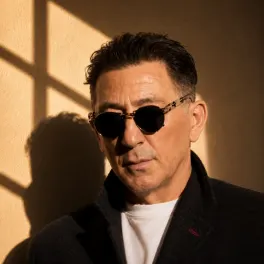
Мне бы в небо Grigory Leps
Grigory Leps (born Lepsveridze) is a Soviet and Russian singer, musician, composer, and producer. He was born on July 16, 1962, in Sochi, into a working-class family. From childhood he was drawn to music: he graduated from music college as a percussionist, and after army service played in rock bands and performed in restaurants. The stage name Leps is a shortened form of Lepsveridze, chosen for a more memorable sound.
His breakthrough came in 1995 with the album Khrani Vas Bog and the song Natali — the track became a radio hit and opened the door to the big stage. In the 2000s Leps cemented his status as one of the country’s leading voices: Ryumka vodki na stole, Ya tebe ne veryu (a duet with Irina Allegrova), Ona ne tvoya (with Stas Piekha), Vodopad, Vyuga, and Orly ili vorony. Over his career he has released more than twenty studio albums — from Na strunakh dozhdya and Labirint to Gangster No. 1, Podmena ponyatiy, and Zavtra.
Grigory Leps (born Lepsveridze) is a Soviet and Russian singer, musician, composer, and producer. He was born on July 16, 1962, in Sochi, into a working-class family. From childhood he was drawn to music: he graduated from music college as a percussionist, and after army service played in rock bands and performed in restaurants. The stage name Leps is a shortened form of Lepsveridze, chosen for a more memorable sound.
His breakthrough came in 1995 with the album Khrani Vas Bog and the song Natali — the track became a radio hit and opened the door to the big stage. In the 2000s Leps cemented his status as one of the country’s leading voices: Ryumka vodki na stole, Ya tebe ne veryu (a duet with Irina Allegrova), Ona ne tvoya (with Stas Piekha), Vodopad, Vyuga, and Orly ili vorony. Over his career he has released more than twenty studio albums — from Na strunakh dozhdya and Labirint to Gangster No. 1, Podmena ponyatiy, and Zavtra.
Leps’s voice is a recognizable baritone with a growling delivery that he describes as stage song with rock elements. He blends chanson, pop-rock, and hard rock, writes lyrics and music, performs at Russia’s largest venues, and regularly holds major concerts — including annual Christmas shows. In 2022 he was named Narodny Artist of Russia.
Beyond the stage, Leps is known as an entrepreneur and restaurateur, a participant in TV projects, and a mentor to young artists. His songs have long been part of Russian-language culture — sung at gatherings, in clubs, and in stadiums — and the name Grigory Leps is associated with powerful emotional delivery and sincerity in every line.
This week’s catalog beacon: listen to the pick, read the lines, and browse the guides — then choose your own path.
Comments on Guides