
ToneMusicVibe Guides
Guides
Read, hit play, and come back tomorrow with a sharper ear.

Hit of the day
Тормози 2.0 Bagryana Nebo
Bagryana Nebo is Latin script for "crimson sky." Under that name a Russian-language women's pop run has been going since 19 December 2025, with no passport, city, face, or birthday in any public credit. The first card is the duet Let's Bounce with Denis RiDer on Studio SOYUZ, two minutes twenty-nine seconds. The solo start is Got Cocky, out on 16 January 2026 at two seventeen: it leads the storefront chart. Solo credits often list Denis Fyodorovich Petrov as composer and lyricist. On On High Heels (10 April, VOBLAGO MUSIC) Bagryana Nebo herself is named as the writer. Nearby in search sit the Bulgarian poet Elisaveta Bagryana and the dance act BAHRYANA: different people.
The run is short and sharp. Got Cocky snaps "my little Labubu" and tells the guy to get lost. Next on the card are the fresh Two Fires from 16 October, the same Let's Bounce, March's A Gust (S&P Digital, two six), April's The Shepherd, and the two-minute On High Heels. The feminine line in the titles is not hidden: Women's Prime, I Won't Get Married, You Won't See My Tears, He Linked Up with the Wrong One, He Picked on the Wrong Girl. Explicit titles are not shy — Work, You Bastard, Feels F***ing Great, Totally F***ed — and some singles are flagged as explicit.
RiDer also shares Whisper of My Soul (30 January) and Feels F***ing Great (6 March), both again on Studio SOYUZ. Daram Dam appears on Got Cocky 2.0; "snova Eva" on Don't Get Bored and Spoiled Boy; BVZA on Let's Bounce 2.0. From May through October a new single arrives almost every week, and several get a 2.0 right away: The Shepherd, Zero, Hit the Brakes, He Picked on the Wrong Girl. By mid-October the card holds about thirty-seven tracks and no album. Runtimes stay around two to three minutes.
This name has no private life: no family, no city, no lasting interview. The public story is the crimson nickname, a woman's line against a cocky mouth, and writing credits that switch from song to song. Listen online.
Today’s entry into the catalog: hit play, open the lyrics or a guide — then follow related tracks from here.
Hit of the week
Я стал тем, кого ненавидел Mihael Gudovskih
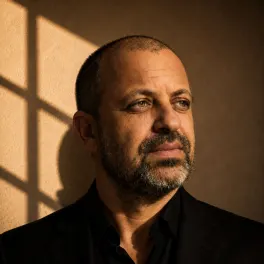
Michael Gudovskikh is a Russian singer-songwriter working at the intersection of pop, chanson, and estrada. His music is often released under the “Pravilnaya Pop Muzyka” (“Proper Pop Music”) banner — a project built on live lyrics, memorable melodies, and a direct, human conversation with the listener rather than short-lived hype.
His songs explore love and pain, family, growing up, childhood memories, fatherhood, and feminine strength. Gudovskikh writes both music and lyrics himself, so each track feels like a personal story — emotional, meaningful, and free of empty formulas. He releases music regularly and quickly finds an audience on streaming platforms and digital music services.
Notable releases include “Ona s kharakterom,” “Krugovorot zhizni,” “Poslushay, syn,” “Vzroslaya doch,” “Detstvo, detstvo,” “Polyubila Nastoyashchego,” “Ona spasla menya molcha,” “Granitsa rodnykh,” and “Skazhi, tsyganka.” This is music for listeners who value sincere vocals, heartfelt lyrics, and “proper” pop with a chanson sensibility. Private life here is material, not décor. In his open copy, divorce is a turning point: after it — a father who “didn’t stop being a dad,” a father’s mistakes, men who cry too, women’s strength, and childhood memory. Karmiel is not an Olympic Stadium stage, but a town from which you write into a phone and post to the feed. The listener meets daily life: a daughter grown up, a son hearing advice, love after 40 said without shame, family and pain in one verse.
Michael Gudovskikh continues to expand his catalog, release new singles, and strengthen his image as an independent artist who speaks about life simply, honestly, and from the heart.
This week’s catalog beacon: listen to the pick, read the lines, and browse the guides — then choose your own path.
Comments on Guides