
ToneMusicVibe Guides
Guides
Read, hit play, and come back tomorrow with a sharper ear.

Hit of the day
Молитва Nikita Kiselov
Nikita Kiselyov (Mykyta Anatoliiovych) is a Ukrainian singer, composer and songwriter from Cherkasy. Born on 23 May 1997, his path ran through music school, Kyiv’s Academy of Variety and Circus Arts, a Ukraine’s Got Talent superfinal, the band TIME OUT, and years as a songwriter. Solo start — 2016 (“Laskovyi Mai,” EP Shlyager 1997); from autumn 2022 — a clear turn to Ukrainian-language releases and a new wave of popularity.
The sound is pop with an R&B feel: soft vocal delivery, danceable hooks, romance next to sharper personal statements. He writes for himself and for the scene — credits include Anna Trincher, SKYLERR, GROSU, Masha Danilova. The catalog carries city vibes, irony, sensuality and the imprint of wartime experience — “Propaganda” grew out of what he lived through in occupied Bucha.
Start with the anchors. “Romantychno” is the main lyric hit, with millions of clip views. “Lift” with SKYLERR entered Ukrainian Apple Music and YouTube charts. “Dva Likhtari” with TAYANNA is the showcase duet. Nearby sit “Chorni Brovy,” “Propaganda,” “Syayvo,” “Polyusy” (a Ukrainian take on Tina Karol’s “Polyus Prityazheniya”), and newer cuts — “Vivtar,” “Bit Trembit,” “SEKS,” “Kryla Leleky.”
Growth runs from TV talent shows and songwriting desks to his own streaming catalog and A-list collabs. Kiselyov holds the niche of a recognizable Ukrainian pop/R&B voice — heard both as a hit performer and as the writer behind other artists’ playlists.
Today’s entry into the catalog: hit play, open the lyrics or a guide — then follow related tracks from here.
Hit of the week
Простите нас, дети Mihael Gudovskih
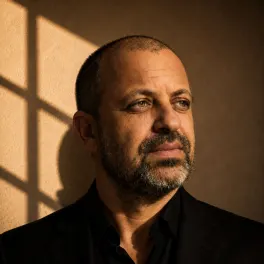
Michael Gudovskikh is a Russian singer-songwriter working at the intersection of pop, chanson, and estrada. His music is often released under the “Pravilnaya Pop Muzyka” (“Proper Pop Music”) banner — a project built on live lyrics, memorable melodies, and a direct, human conversation with the listener rather than short-lived hype.
His songs explore love and pain, family, growing up, childhood memories, fatherhood, and feminine strength. Gudovskikh writes both music and lyrics himself, so each track feels like a personal story — emotional, meaningful, and free of empty formulas. He releases music regularly and quickly finds an audience on streaming platforms and digital music services.
Notable releases include “Ona s kharakterom,” “Krugovorot zhizni,” “Poslushay, syn,” “Vzroslaya doch,” “Detstvo, detstvo,” “Polyubila Nastoyashchego,” “Ona spasla menya molcha,” “Granitsa rodnykh,” and “Skazhi, tsyganka.” This is music for listeners who value sincere vocals, heartfelt lyrics, and “proper” pop with a chanson sensibility. Private life here is material, not décor. In his open copy, divorce is a turning point: after it — a father who “didn’t stop being a dad,” a father’s mistakes, men who cry too, women’s strength, and childhood memory. Karmiel is not an Olympic Stadium stage, but a town from which you write into a phone and post to the feed. The listener meets daily life: a daughter grown up, a son hearing advice, love after 40 said without shame, family and pain in one verse.
Michael Gudovskikh continues to expand his catalog, release new singles, and strengthen his image as an independent artist who speaks about life simply, honestly, and from the heart.
This week’s catalog beacon: listen to the pick, read the lines, and browse the guides — then choose your own path.
Comments on Guides